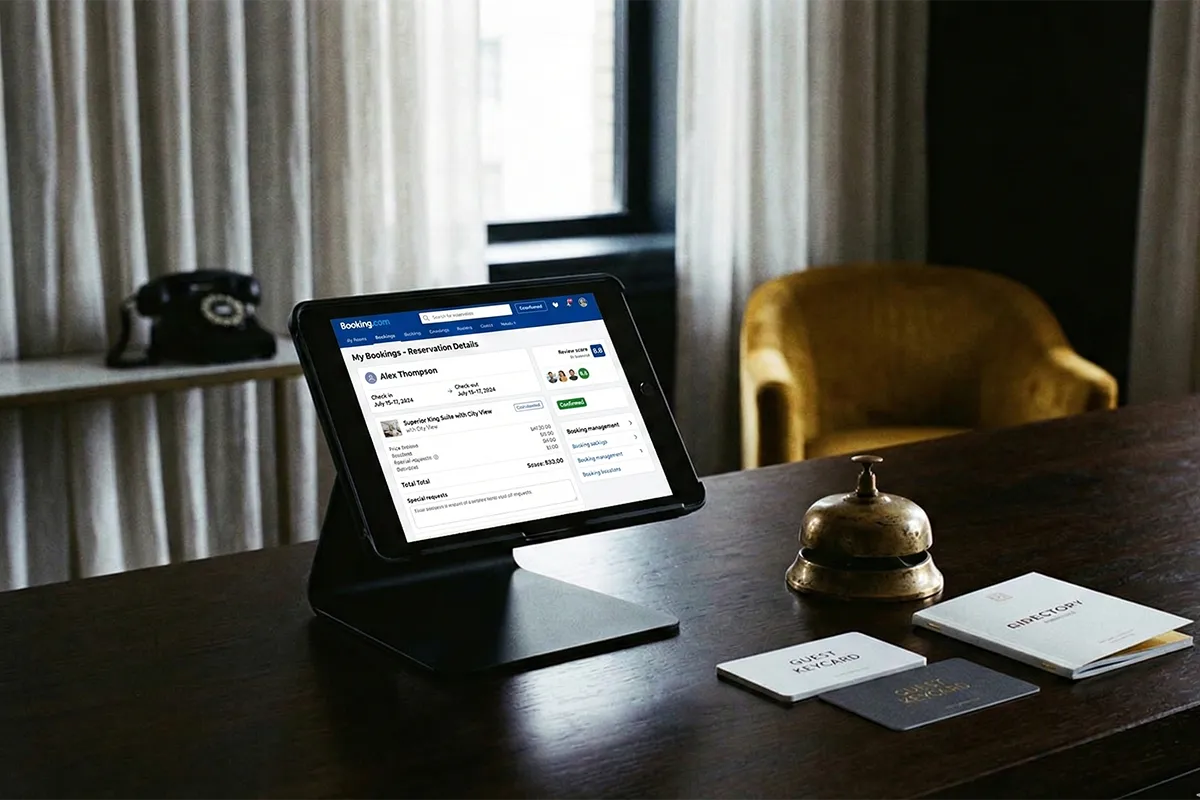
OTA bookings land in Mews with a masked email address and no direct line to the guest. The check-in link is how we get a real name, a real email, and a real phone number before they arrive.
One text is now enough to move OTA-booked guests off OTA messaging and into a channel we actually own. That has been the biggest missing piece in running a small hotel on Mews, and Mews fixed it.
The single hardest part of running a boutique hotel on OTAs is not the booking itself. It is what happens after. The guest lands in Mews with a masked email address like guest@booking.com, an OTA-managed inbox that only they see if they open the app, and a check-in flow that quietly breaks because the “real” email on file belongs to the platform instead of the person. You want to reach them directly, and you often cannot.
That changed for us. Mews shipped a check-in link that works for nearly any guest, regardless of booking source, regardless of whether the email on the reservation is real, and without a login. One tap and the guest is inside the check-in form. There is no password to enter, no OTA inbox to open, and no wall to climb through. The one exception is Airbnb, and I get to it below.
It has quietly changed how we run our property.
The problem every Mews hotel on OTAs already knows
Every hotelier on Mews has lived this. A guest books through Booking.com. The reservation lands in Mews with a masked @booking.com email address attached. You send them your standard pre-arrival online check-in link, which goes to an inbox the guest never sees. They arrive without completing check-in, and your team handles the whole thing manually at the desk.
The alternative is to fall back to messaging them through the OTA inbox. That inbox belongs to the platform, not to you. Your carefully written pre-arrival message sits next to fifty promotional emails from other Booking.com listings, and your guest opens it hours later, if at all. The relationship happens on someone else’s channel, on someone else’s timing, with someone else’s branding wrapped around it.
Multiply that by every OTA guest, which for most boutique hotels is most guests, and the pattern is obvious. OTAs own the guest relationship because they own the channel.
The workaround has always been the phone number. Most OTAs share the guest’s real phone number with the property, even when the email is masked. But without a way to hand the check-in flow off to a text message, the phone number mostly sat unused for anything that mattered before arrival.
What the check-in link makes possible
The Mews check-in link solves the specific technical problem in a clean way. It produces a URL the guest can tap from anywhere, and that URL drops them straight into their own check-in form without needing to log in or match an email. It works whether the reservation was made through a direct booking, a Booking.com reservation, a phone call, or a walk-in. Airbnb is the exception.
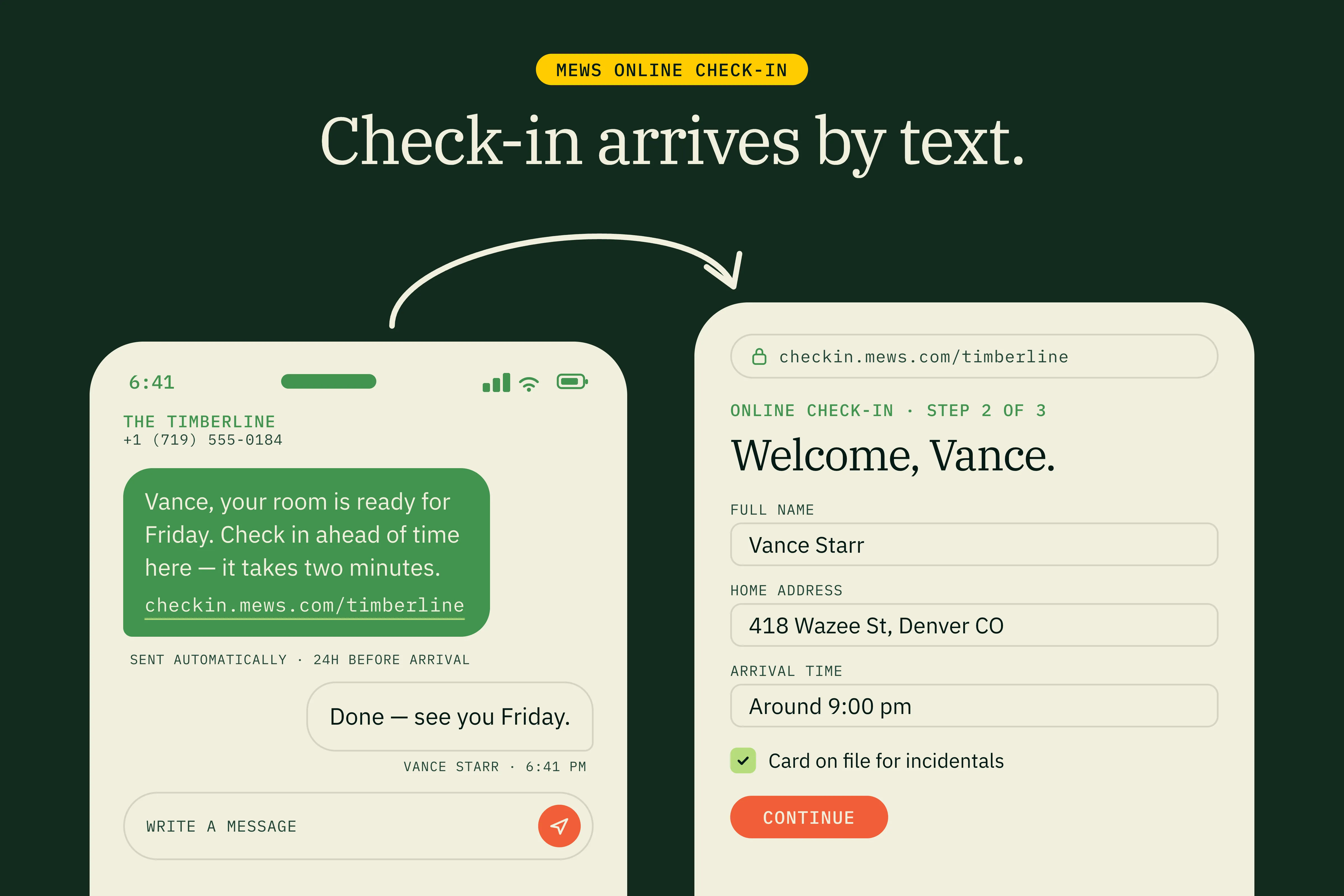
We text it. The guest taps it. They check in from a coffee shop on the drive up, using their thumb, in about thirty seconds. Their real email address flows back into Mews. Their real name gets attached to their profile. Their preferences, any special requests, and their signed terms of stay all land in one place.
The exchange takes them under a minute. It takes us no time at all.
How we use it at The Timberline
The first message goes out the moment a guest books, as long as the reservation came with a phone number. It confirms the reservation, and it comes from our hotel’s number instead of a no-reply address, so the guest has a real thread with us before anything else happens.
If the reservation came without a phone number, we message the guest through the OTA by email and send the check-in link there. That one message is doing the important work. The moment the guest taps it and checks in, their real name, real email, and real phone number land in Mews. We stop talking to guest@booking.com and start talking to a person, well before they arrive.
From there our pre-arrival automation picks it up. The pre-arrival text goes out from our hotel’s number, short and personal, with the check-in link embedded for anyone who still hasn’t completed it. The guest can text back with a question, and that reply lands in our shared team inbox alongside every other conversation with them.
Because the link goes into the Mews check-in flow, everything downstream works exactly the same as a direct booking. Online check-in, payment authorization, terms and conditions, ID capture, and preference collection all happen through the same interface, regardless of how the booking originated.
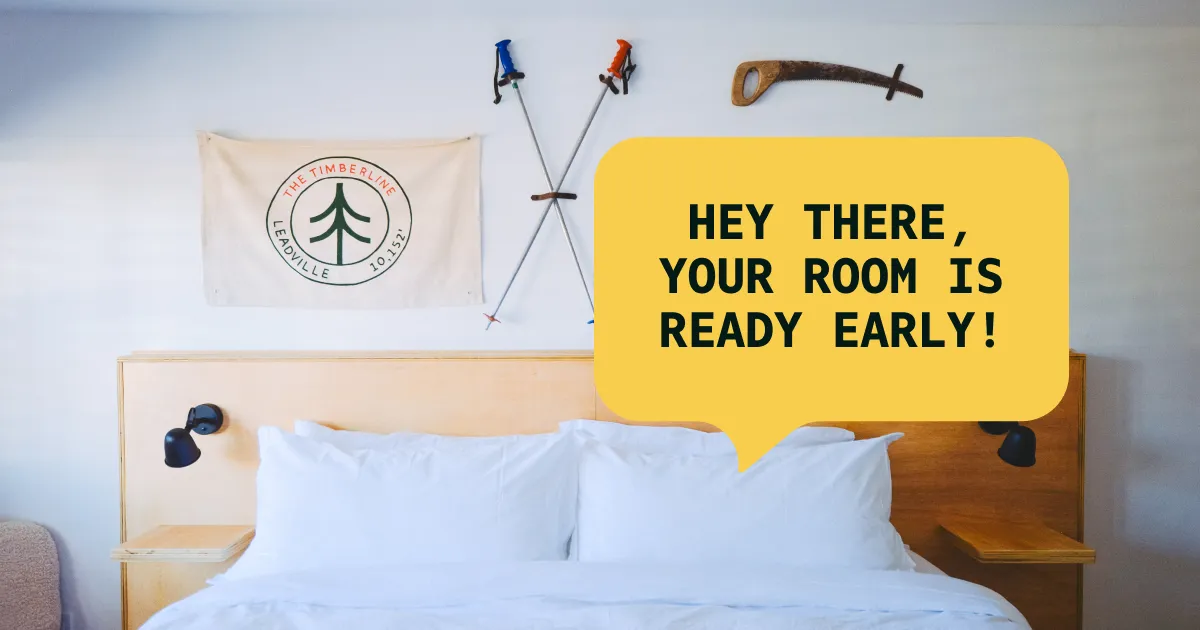
Once the guest completes check-in, our full guest messaging automation takes over: door codes, room-ready pings, mid-stay check-ins, and post-stay thank-yous. Every one of those messages goes out from our number, in a channel we control, tied to real guest data we now have.
The Airbnb exception
There is one booking source where none of this works, and it is worth knowing before you build the automation: Airbnb.
An Airbnb reservation lands in Mews with no email address at all. There is no masked alias like the one Booking.com sends, just an empty field. Airbnb does not share a guest email with the property, and Mews needs an email on the reservation to create the check-in link. So for an Airbnb guest, the link cannot be generated. That is not a bug in anyone’s setup. It is a known failure, and it will happen on every Airbnb booking until Airbnb changes what it shares.
We stopped fighting it. Our Airbnb guests never get asked to check in online. By the time an Airbnb reservation reaches Mews, Airbnb has already verified the guest’s identity and taken their payment, which is most of what our check-in form exists to do. Asking them to do it again would be friction with nothing on the other side of it.
So instead of a check-in link, an Airbnb guest gets their door code. Their arrival text still goes out from our number, and it still opens a real thread they can reply to. It just carries the code and the arrival instructions rather than a link to a form.
The part that keeps this from becoming a headache is that it is one workflow, not two. Hello Hotel’s automations can branch on the specific booking source, so our pre-arrival workflow checks whether the reservation came from Airbnb before it decides what to send. If it did, the guest goes down the door code path. If it did not, they get the check-in link like everyone else. There is no second workflow to keep in sync, no failed run showing up on the dashboard every time an Airbnb booking comes in, and nobody at the desk remembering which guests need which message.
If you run RemoteLock, the door code in that text is pulled straight from the reservation by our RemoteLock integration, so nobody looks that up either.
What it actually changes
The operational win is the obvious one. Our OTA-booked guests, Airbnb aside, actually complete online check-in now, which means less friction at the front desk, faster room turns, and cleaner data flowing through the rest of the stay.
The strategic win is the one I am more excited about. Every OTA-booked guest, from the moment they tap that first check-in link, is building their relationship with our hotel on our channel instead of the OTA’s. We text them. They text us back. We never touch the Booking.com inbox again for that guest. The next time they want to stay somewhere in Leadville, our hotel is the one whose number they already have in their phone.
That is what “owning the guest relationship” is supposed to mean. It is not a database of email addresses that never get opened. It is a real conversation, on a channel we control, with a real person on the other side. For years, small hotels have been told to build direct relationships while their entire operational stack forced every booking through OTA messaging. This is the first thing I have seen that meaningfully changes that at the source.
If you run on Mews
If you run your property on Mews, our Mews integration handles the automation piece: we send the link at the right moment from your hotel’s number, we route the reply into a shared inbox, and we tie the rest of the guest messaging automation to what happens next.
I would love to show you what this looks like end to end. It is one of the more meaningful integrations we have shipped, and I think it will change how boutique hotels think about their OTA relationships for the next few years. Book a demo and I’ll walk you through it.